
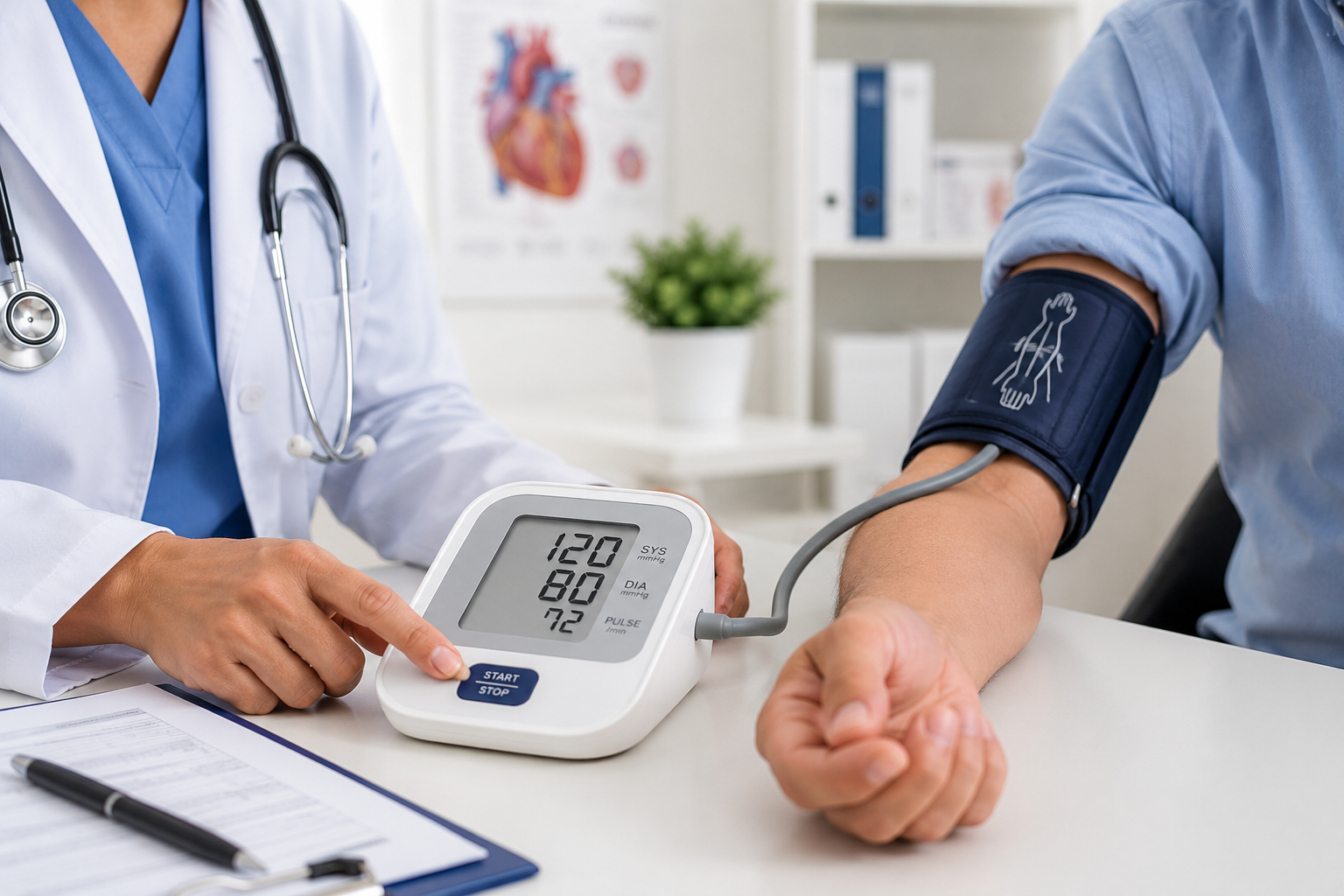
What is blood pressure? It’s the force of blood pushing against your artery walls as your heart pumps. Think of it like water pressure in a garden hose. When you get your blood pressure checked, those numbers tell an important story about your heart health. Understanding what they mean helps you catch potential problems early and take action before they become serious. Making preventive health a priority starts with knowing your numbers.
Breaking Down the Numbers: Systolic vs. Diastolic
The Top Number: Systolic Pressure
When you see blood pressure numbers such as 120/80, that first number is your systolic pressure. It measures the force in your arteries when your heart beats and pushes blood out. This is the moment of maximum pressure in your circulatory system.
A high systolic number means your heart is working harder than it should with each pump. This number typically gets more attention from medical providers because elevated systolic pressure is common as we age and strongly predicts cardiovascular risk.
The Bottom Number: Diastolic Pressure
The second number measures diastolic pressure, which is the pressure in your arteries between heartbeats when your heart relaxes and refills with blood. It represents the baseline pressure your blood vessels experience constantly.
Both numbers matter. While systolic pressure often gets the spotlight, diastolic pressure that’s too high means your arteries aren’t relaxing properly between beats, which strains your entire cardiovascular system.
The Blood Pressure Categories
What is a normal blood pressure? According to current guidelines, here’s how the blood pressure range breaks down:
- Normal: Less than 120/80 mm Hg
- Elevated: 120-129 systolic and less than 80 diastolic
- Hypertension Stage 1: 130-139 systolic or 80-89 diastolic
- Hypertension Stage 2: 140/90 mm Hg or higher
- Hypertensive Crisis: Higher than 180/120 mm Hg (seek immediate medical care)
If you’re looking at a blood pressure chart, you’ll notice that you only need one number to be elevated to move into a higher category. For example, 125/82 would be considered Stage 1 hypertension because of the diastolic number, even though the systolic is in the elevated range.
Normal blood pressure isn’t just a single target. While the categories stay the same, treatment goals may vary based on your age, overall health, and whether you’re managing a chronic condition such as diabetes or kidney disease.
What Influences Your Reading
Your blood pressure readings can swing throughout the day based on various factors. Stress, caffeine, exercise, and even talking can temporarily raise your numbers. That’s why doctors don’t diagnose high blood pressure based on a single reading.
Time of day matters too. Blood pressure typically dips during sleep and rises in the morning. Your physical position, whether you’ve recently eaten, and even how full your bladder is can all affect the reading. Taking measurements at the same time each day helps you track meaningful patterns.
Long-term influences include age, weight, diet, physical activity levels, genetics, and medications. Understanding these factors helps you work with your health care provider to develop effective strategies. Taking a holistic approach to your health means addressing both physical and mental well-being, since stress and anxiety significantly impact blood pressure.
When to Be Concerned
High blood pressure is often called the “silent killer” because it rarely causes symptoms until serious damage has occurred. However, you should seek immediate medical attention if you experience:
- Blood pressure reading above 180/120
- Severe headache with confusion or vision changes
- Chest pain or shortness of breath
- Numbness or weakness
- Difficulty speaking
Regular monitoring is essential for your overall health. Even without dramatic symptoms, consistently elevated readings require attention. If your numbers are creeping up, don’t wait for a crisis to take action.
Knowledge Is Power: Your Heart Health Is in Your Hands
Now that you understand what your blood pressure numbers mean, you can be proactive about monitoring and managing them. Home blood pressure monitors are affordable and easy to use. Take readings at the same time daily, while seated and relaxed, with your arm supported at heart level.
Small lifestyle changes can make a real difference. Regular physical activity, limiting sodium, maintaining a healthy weight, moderating alcohol, and managing stress all help keep your numbers in a healthy range. Work with your health care team to create a personalized plan.
Whether you’re reviewing options during open enrollment or scheduling your annual screenings, make blood pressure monitoring a priority.
About Mountain Laurel Medical Center
Mountain Laurel Medical Center is a federally qualified community health center dedicated to providing the highest-quality primary health care to our community, regardless of ability to pay. Operating in multiple offices across Maryland and West Virginia, we offer a full spectrum of services, including primary care, behavioral health and psychiatry, chronic disease support, diagnostic imaging, lab work, in‑house pharmacy, registered dietitian counseling, insurance enrollment assistance, and even a mobile community wellness van to reach rural populations.
We offer sliding fee scales and 24/7 after-hours phone access, consistently earning high-quality recognitions, such as Health Resources and Services Administration badges and Patient‑Centered Medical Home designations.
Looking for personalized guidance? Contact us to learn how we can support your family’s health goals with affordable, high-quality care.
